Vapour barrier
Concrete is not waterproof. A sheet under the slab, lapped at the joints and turned up against the wall, is what keeps ground moisture out of the room and out of whatever flooring goes down later.
When you take a basement floor down, you move it closer to the water. The drainage that kept the old floor dry was designed for the old depth, and in most cases it simply cannot serve the new one. This is not an upsell attached to underpinning — it is part of the same structure.
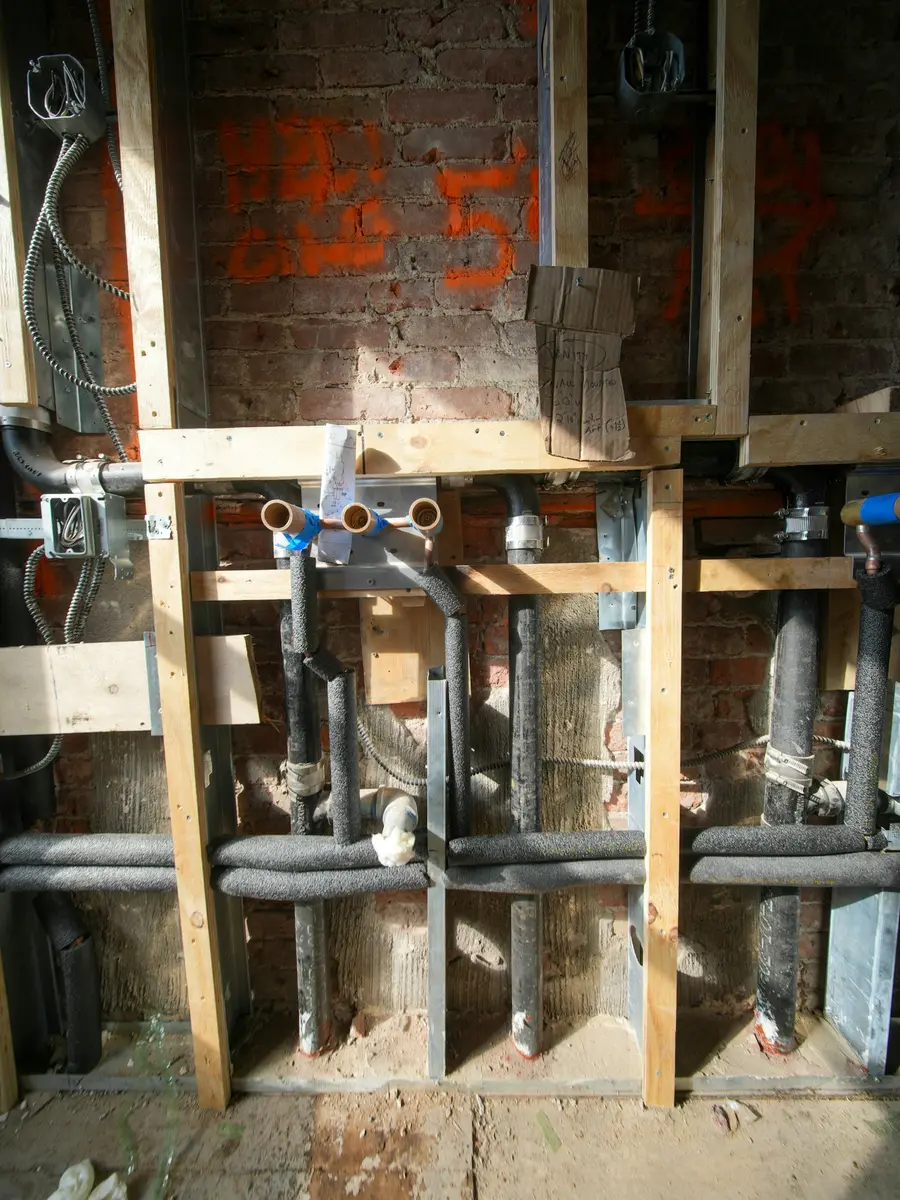
A house's original weeping tile sits beside the original footing. Lower the floor by two feet and that tile is now two feet above the level you need drained. Water arriving at the new slab has nowhere to go, and the old tile cannot help it — it is uphill.
So a new perforated line goes in at the new footing level, inside the building, bedded in clear washed stone. Clear stone matters: crushed material with fines in it packs and silts the perforations closed, which is why a tile can be five years old and already useless.
Downhill is no longer available, so the new tile runs to a sump pit and the pump lifts it out. That makes the pump part of the structure of the basement rather than an appliance in the corner, and it makes a battery or water-powered backup a reasonable thing to ask for rather than a luxury.
Where the discharge is allowed to go is a local rule, not a preference. It is confirmed before the pit location is fixed, because moving it afterwards means opening the new floor.
Concrete is not waterproof. A sheet under the slab, lapped at the joints and turned up against the wall, is what keeps ground moisture out of the room and out of whatever flooring goes down later.
Where a wall is damp rather than leaking, a dimpled membrane on the inside face gives that moisture a drained path down to the new tile instead of into the framing you are about to build.
If the outside of a wall is being exposed anyway — for a walkout, a window, or to relieve pressure on a bowing wall — that is the cheapest it will ever be to waterproof it properly from the outside.
Everything above lives under or behind the finished floor. Adding it later means breaking out a slab that was poured a few months earlier. The order of operations here is the whole point: drainage, then barrier, then slab.
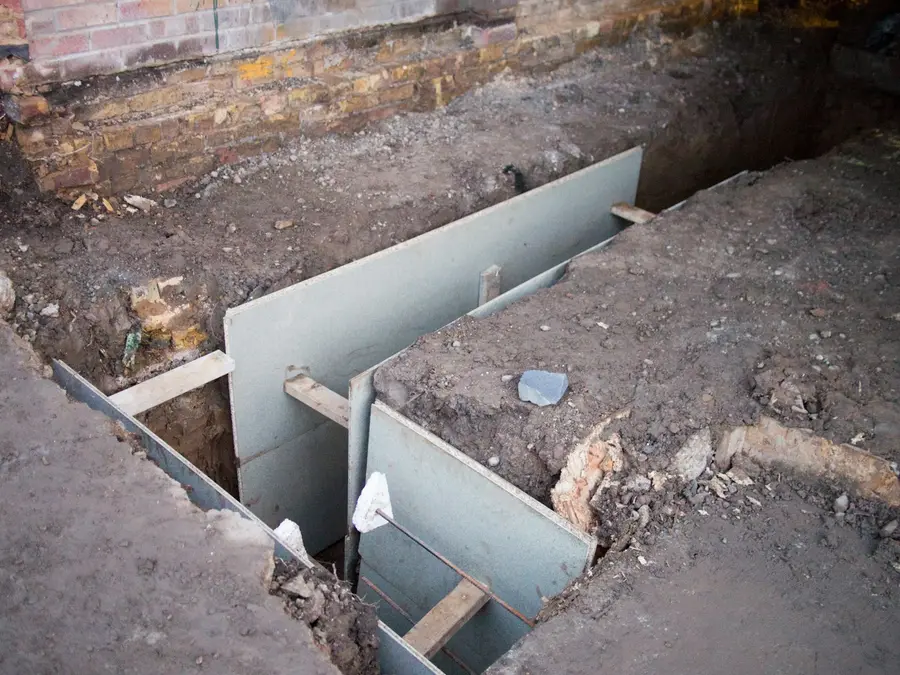
You have never had water at the old floor level. Lowering the floor changes the question. Once the new tile is below the level anything can drain to by gravity, a pump is the only way water gets out, whether or not it has arrived yet.
A mains-only pump stops. That is exactly the argument for a backup — a battery unit or a water-powered one — and the time to install it is while the pit is being built, not the first night it matters.
For a lowered floor, interior drainage is the core of the system and it works. Exterior waterproofing solves a different problem: keeping water out of the wall itself. If the wall is wet, or if it is being dug out anyway for other reasons, doing both is worth it. If it is dry, interior is usually the sensible spend.
Send the height from your floor to the underside of the joists and a photo of the wall. We will tell you what is possible before anyone quotes anything.