Service

Foundation repair

Not every crack is a problem, and not every problem shows up as a crack. Foundation repair starts by working out which one you have — a wall that moved once and stopped, a wall that is still moving, or a footing that is sitting on ground that will not hold it.

Foundation Repair in Mississauga

Reading what the wall is telling you

Usually not structural

Fine vertical cracks in a poured wall that appeared in the first year or two, do not go anywhere and stay the same width. These are shrinkage. They can still leak, and sealing them is a waterproofing job rather than a structural one.

Worth watching

Diagonal cracks running from the corner of a window or door opening, hairline stepping in a block wall, or a crack that is wider at one end than the other. Something moved. The question is whether it has stopped.

Get it looked at now

A wall bowing inward, horizontal cracking part-way up a block wall, a crack you can see daylight or soil through, doors and windows on the floor above that have started binding, or a crack that measurably widens over a few months.

What we actually do about it

Injection. A crack in a poured wall that is stable but wet gets filled from inside, under pressure, with a resin that goes all the way through the wall rather than sitting on the face of it. This stops water. It is not a structural repair and should not be sold as one.

Reinforcement. A wall that is bowing under soil pressure needs the load taken somewhere. Depending on how far it has gone and what the wall is made of, that is carbon fibre straps bonded to the inside face, steel beams fixed top and bottom, or in bad cases rebuilding the section.

Excavation and relief. If the pressure pushing on the wall is water in the soil, reinforcing the inside without dealing with the outside treats the symptom. Sometimes the right answer is to take the earth off the wall, waterproof it and give the water somewhere to drain.

Underpinning as a repair. When a footing has settled because it is bearing on fill, disturbed ground or soil that was never adequate, the fix is to take that footing down to ground that will carry it — the same technique used to gain headroom, applied for a completely different reason.
Floor above — unchangedBasementFloor level beforeFloor level afterthe height you gainGrade outsideExisting wallExisting footingdry-packed jointNew concrete pinpoured under the old footingVapour barrier under the slabWeeping tile in clear stone
Underpinning used as a repairIdentical technique, different purpose: instead of lowering the floor, the footing is carried down to soil that can actually hold it.

The honest first step is measurement

A crack that has been the same width for ten years and a crack that opened two millimetres this winter look identical in a photograph. If nothing is obviously urgent, the useful thing is a baseline: the crack marked and measured, then measured again after a season. That answers the only question that matters — is it still moving — and it costs almost nothing.

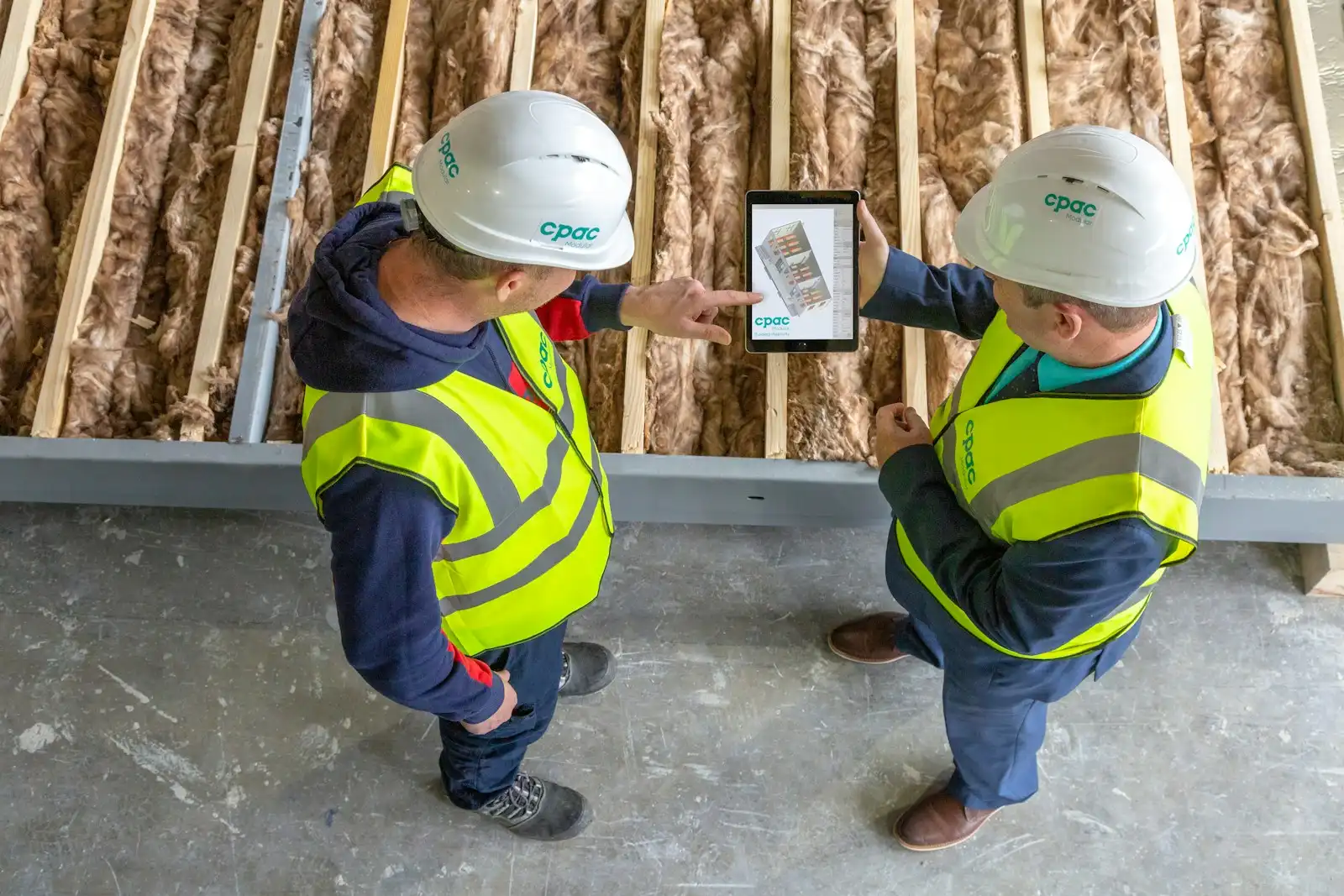
Two workers reviewing plans on site
First step

Measure the crack, then measure it again after a season. Movement is the question, not width.

Questions we get asked about this

Is a crack in my basement wall serious?

It depends far more on its shape and behaviour than on its size. Fine vertical cracks in poured concrete are usually shrinkage. Horizontal cracks part-way up a block wall, stepped cracks through the joints, and any crack that is widening are the ones that need attention. If you can see soil or light through it, do not wait.

My wall is bowing. Can it be pushed back?

Sometimes, and only as part of a proper repair with the soil pressure relieved from outside first. Straightening a wall by force from the inside without dealing with what pushed it is how a bowing wall becomes a failed wall.

Do you charge to look at it?

Tell us what you are seeing and send photographs first — a lot of questions get answered from a clear photo and the age of the house, at no cost to anyone. If it needs an in-person look we will say so up front, along with what that costs, before we arrive.

Will my insurance cover this?

Generally foundation movement caused by settlement, soil conditions or age is a maintenance matter rather than an insured loss, while sudden damage from a specific event may be treated differently. That is a question for your broker with the actual policy in front of them, not for a contractor.

Get a straight answer about your basement

Send the height from your floor to the underside of the joists and a photo of the wall. We will tell you what is possible before anyone quotes anything.

Book an assessment